
COLLECTIVE VIBE 2023
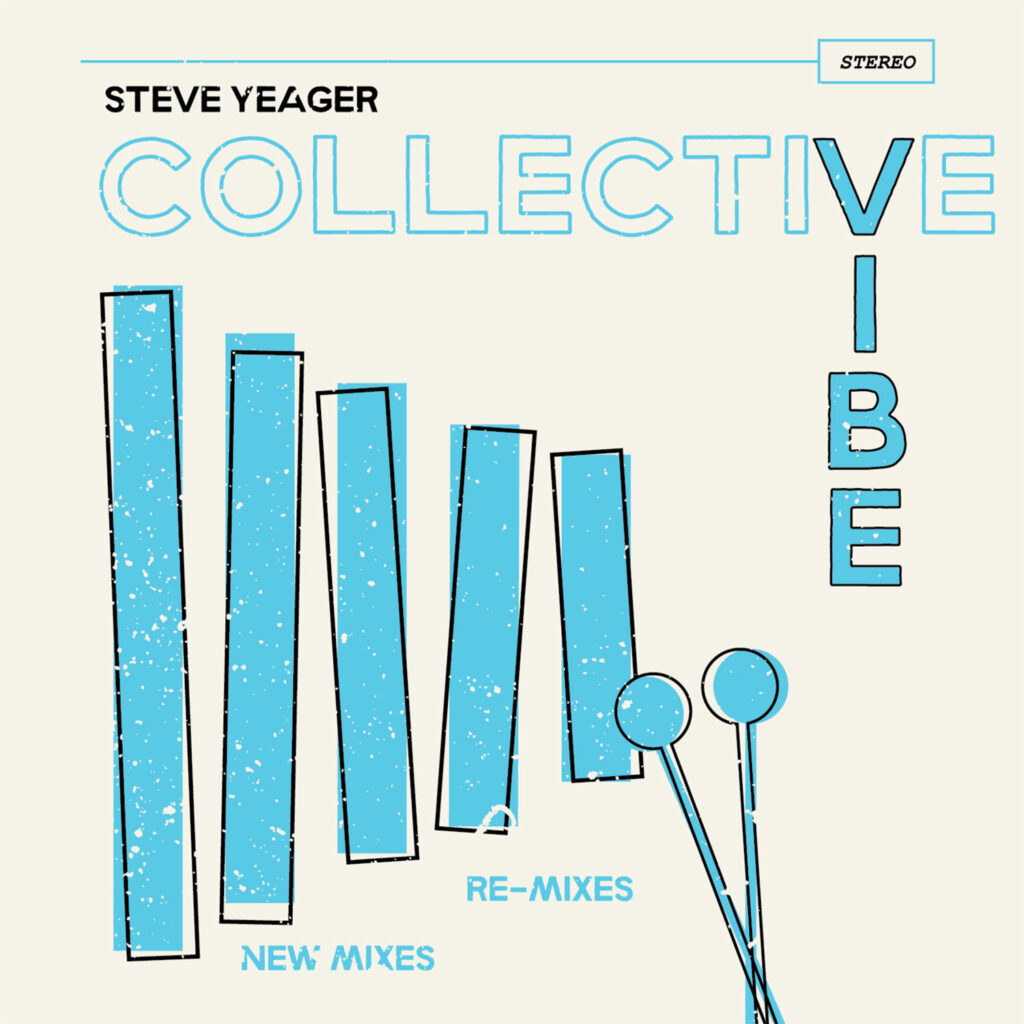
COLLECTIVE VIBE 2023
Scott Yanow
Jazz Journalist/Historian
April 2023
Born and raised in Minnesota, Steve Yeager remembers, “I started playing drums in the sixth grade school band, learning snare drum rudiments.” Allen C. Benson, a great musician, artist and percussionist came to town in 1976; he was a really big influence on me. Percussionist Marv Dahlgren from the Minnesota Orchestra was my next connection. He was a fine Jazz Vibes player that did club dates in the late 70’s, and I hooked up with him for lessons before heading off to college. Growing up, my parents took me to see Lionel Hampton, the Modern Jazz Quartet, and the George Shearing groups. A small club in Minneapolis called the Rainbow Gallery – which was a tea room – was a hangout in late high school. Saw Philly Joe Jones, George Coleman et al, with locals Bobby and Billy Peterson as constants.”
Graduating from St. John’s University with degrees in Psychology and Music, he later attended the Berklee College Of Music in Boston – where through a tape audition he was one of the the recipients of a Berklee Professional Music Scholarship and a Gary Burton Jazz Masters Incentive Award. Studies included lessons with Ed Saindon and regular ensembles and masterclasses.
Since that time he has returned to Minnesota and has had several overlapping careers. As an educator, Yeager taught Vibes and improvisation at the University of Minnesota for ten years as an adjunct faculty member, taught music production as a LOGIC certified trainer at the Minneapolis Media Institute, and 6 years in the Anoka Hennepin School district teaching Music Production.
As a producer and an arranger-composer, he has produced a countless amount of music for other artists along with sync licensing for movies and television. He is also an engineer who is expert at mixing and mastering (except for his own music album releases – for those, he always hands the faders to someone else). And, most importantly, as a vibraphonist he has developed his own original sound and led four albums: April Sessions (1998), Suite MJQ (2000), New Groove Blues (with organist Tony Monaco in 2003), and Vibraharp (2020). “The songs in this collection are pieces that I’m proud of but were not publicized much in the past. I took most of the selections from older records and edited them, sometimes remixed them, and cut their length down to get to their essence.” The music is drawn from April Sessions (“Say It Over and Over Again,” “Moments,” “Days,” and “I Fall In Love”), Suite MJQ (“Ballad For Milt” and “Fugette”), and Vibraharp (“The Promise”) with “Deep Blue” and “Dizzy Who?” being taken from sessions that Yeager had recorded in St. Paul during 2014-16. In addition, “Say I Do” was previously unreleased. The diverse yet unified program begins with the catchy “Dizzy Who?” A joyfully funky number, it has an assertive theme, riffing horns, disco strings, and a strong contribution from organist Kevin Gastonguay in addition to the leader’s vibes. “Say It Over And Over Again” is primarily a long and beautiful melody statement by Yeager. He displays his individuality, often allowing a single note to ring over several bars – rather than filling in the space with double-time runs. He lets the melody and the bar vibrato speak for itself. The original version of this song on his 1998 April Sessions CD features a beautiful Piano solo by the late great Bobby Peterson – and is worth seeking out.
“Fugette” is taken from a tribute to Milt Jackson and the Modern Jazz Quartet that was recorded soon after Jackson’s passing in 1999. The straight ahead jam teams Yeager again with pianist Bobby Peterson, bassist Gordon Johnson, and drummer Phil Hey. It features some Bach-inspired counterpoint that pianist John Lewis loved to play.
The most extensive editing and remixing took place on three of the selections from April Sessions. “On ‘I Fall In Love,’ ‘Moments,’ and ‘Days, I used an MPC sampler and the Pro Tools audio stems to cut up the tracks and form a new arrangement. I sent those to Kevin Gastonguay who added keys and B-3 organ , Andrew Foreman electric bass and Redi Kennedy conjured a drum part (there are no drums on April Session) and completely reinvented the songs.” Since the melodies are now absent (other than a brief hint of ‘When I Fall in Love’ on ‘I Fall In Love’), no one could tell from listening to these what the original songs were.”
“Deep Blue” features Yeager in a slightly funky setting with keyboardist Kevin Gastonguay and the backing of three horns. “Ballad For Milt” from the MJQ project is an excellent ballad feature for Yeager and finds him repaying his debt to Milt Jackson, the most influential of all jazz vibraphonists.
“Days” a Remix – quickly changes the mood. It is a catchy and danceable number set up by drummer Reid Kennedy, that in this version, is a very well-disguised piece based on “The Days Of Wine And Roses.” The organ and tenor add to the soul jazz groove.
The previously unreleased “Say I Do” is a change of pace for, while Steve Yeager produced this selection, he does not play on it. Instead it has tenor-saxophonist Brian Snowman Powers in the lead during an easy-listening R&B-ish groove. “Moments” is a disguised “Stolen Moments” that gives no hint of its source. No matter, the new piece stands out on its own with tenor-saxophonist Irv Williams and Yeager as the most prominent voices.
The intriguing and consistently enjoyable program concludes with “The Promise.” Originally called “Promise Of Love” and released on his album Vibraharp that included a beautiful vocal by Lucia Newell based on a poem by Sara Teasdale – it now puts the focus on its haunting theme with Adam Rossmiller on flugelhorn stating the classical-inspired melody. Throughout his career, Steve Yeager has contributed to the legacy of the vibraphone, making significant contributions as a soloist, producer, composer, in his published works, and as an educator.
Collective Vibe puts a new spin on some of his earlier recordings, utilizing parts of his past to create new and fun music.
VIBRAHARP 2020
Scott Yanow
Jazz Journalist/Historian
2023
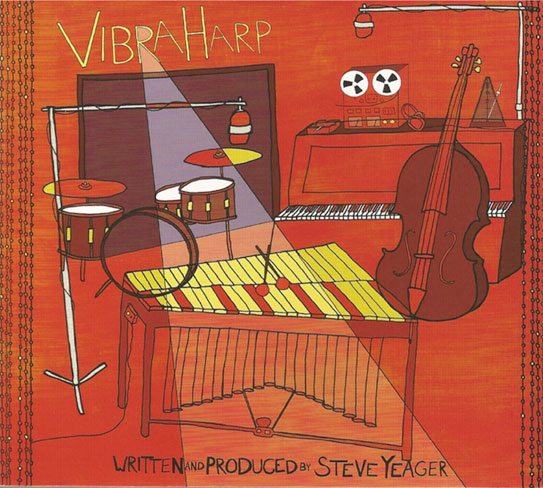
Steve Yeager has had successful overlapping careers as a performer, composer, producer and educator. In fact, his work in several fields has kept him so busy that it is sometimes overlooked how talented a jazz vibraphonist he has always been. Vibraharp, his fourth album as a leader, finally puts him back in the spotlight.
Since graduating from St. John’s University and attending the Berklee College Of Music, Steve Yeager has taught at the University of Minnesota and the Minneapolis Media Institute, written and produced a countless amount of music for movies, television and multimedia, and has consistently uplifted the projects of others. He had previously led three albums (1998’s April Sessions, Suite MJQ from 2000, and New Groove Blues with organist Tony Monaco in 2003), in addition to playing piano on the recent Poetry Of Sara Teasdale (with Katy Vernon).
But Vibraharp is arguably his finest jazz record to date. The set of 11 originals has plenty of melodic music that is often easy-listening but never sleepy, and filled with subtle creativity. All of the selections feature a very attractive group sound that is sometimes a little reminiscent of the George Shearing Quintet. Joined by a supportive rhythm section with some solo space for pianist Adi Yeshaya, keyboardist-organist Kevin Gastonguay, and guitarist David Singley, Yeager is also backed by various other musicians along the way including a string section arranged by Yeshaya; Lucia Newell takes an effective vocal on “Promise Of Love.”
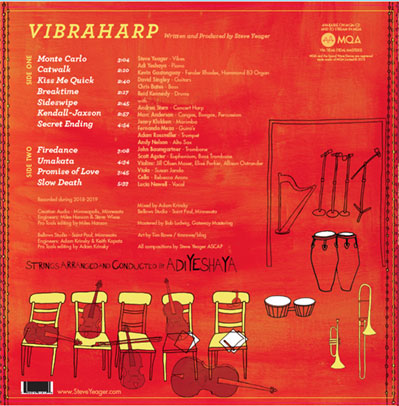
To name a few highlights, “Monte Carlo” has an appealing tango feel, “Catwalk” includes a rhythmic melody that does conjure up the walk of a cat before it becomes a vehicle for Yeager’s swinging vibes, and the bluesy “Breaktime” has a particularly likable melody and a Latin tinge. Other selections include a funky “Sideswipe,” the pretty ballad “Kendall Jaxons,” a sensuous “Secret Ending,” the cinematic “Firedance,” and the quietly dramatic closer “Slow Death.”
Throughout Vibraharp, Steve Yeager creates vibraphone solos that are accessible yet a little unpredictable, swinging hard in his own style. This set is easily recommended to anyone who likes laidback straight ahead jazz and the sound of a masterful vibraphonist.

Sara Teasdale 2021
Kevin O’Connor, KBEM music director:
Mpls StarTribune January 29, 2021
“This album is both a primer into the poetry of the brilliant American lyric poet Sara Teasdale, and a soundscape. Vernon’s delivery of the sultry and poignant lines is the perfect vibe for Yeager’s sonic vision.”
NEW GROOVE BLUES 2003
John Stevenson
e-jazz news.com
Anyone accompanying a jazz organist deserves recognition. With its pedals and multiple decks of keys, the organ is a monster that can sonically devour the rest of the ensemble.
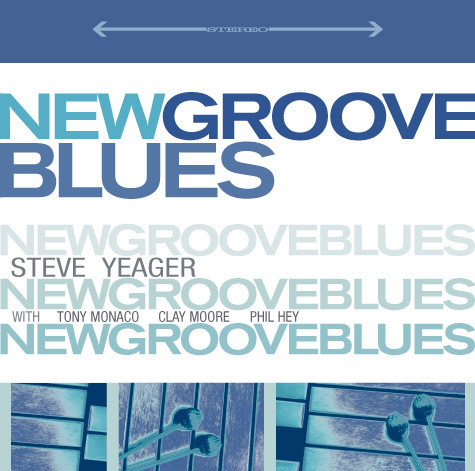
Vibist Steve Yeager appears to have gotten the balance just right on his most recent offering with B-3 exponent Tony Monaco, guitarist Clay Moore and drummer Phil Hey.
Gifted with a sure-footed sense of melody and a dynamic approach, Yeager handles the material (among the tunes the beautiful original “Lisa”) magisterially.
JAZZ IMPROV MAGAZINE
Reviewed by Vince Giantomasi
Vibraphonist Steve Yeager has put together a unique ensemble for his third release, New Groove Blues on the Collective Vibes Records label. Joining Steve on the album is B-3 Hammond organist, Tony Monaco, guitarist, Clay Moore and drummer Phil Hey. This blend of instruments is intended to “provide a texture that is unique and instantly appealing,” as Yeager points out in his bio.
The CD includes seven tunes by such composers as Harburg & Lane, Count Basie, Burt Bacharach & Hal David, Kenny Dorham, John Lewis, George Wallington, “Baby Face” Willette and two originals by Yeager.
He opens the album with a swinging up-tempo arrangement of “Old Devil Moon.” Here we find Moore and/or Monaco harmonizing the melody lines with Yeager, which plays quite well and has a very pleasant appeal. Tony Monaco has a chance to show his speed and chops on this tune. He is a fine B-3 technician and does not lack the soulful touch, which is expected from a player of that instrument. His bass work is superb.
On Count Basie’s “Easy Does It” Yeager and Herb Pilhofer, both of who are the arrangers for the CD have the band playing this tune as it was intended. It is easy-flowing with a catchy head-bobbing beat by the guitar and drums that strum along with smooth time and quarter note chords. Monaco harmonizes behind the vibes and does a call and response with Yeager right into his solo, which is laid-back and right in line with the tune. The only drawback to this tune is that half of his solo (on one of the two keyboards) is barely audible. The mix on this tune is not up to par.
Yeager selected “Godchild” as his third tune on the CD a number written by George Wallington. This native of Sicily was one of the most prolific writers of modern jazz “standards” who is best known for this tune, “Godchild” and “Lemon Drop,” two tunes that were favorites of big band leaders, Stan Kenton, Chubby Jackson, Woody Herman and Miles Davis. Very few recordings of Wallington exist with him as the leader but he has worked behind the likes of Dizzy Gillespie (1944 at the Onyx Club), Red Rodney and the groups of Charlie Parker, Allen Eager, and a multitude of others. Yeager and company honor Wallington with an excellent arrangement and rendition of his tune. Here there are terrific solos by Yeager and Monaco. Yeager bends the notes on the vibes ala Gary Burton while Monaco adds great bass behind him. There are very short solos by Hey and Moore, which are as little too short but still the same very effective.
“The Look Of Love” finds some of the best work on the CD by guitarist, Clay Moore. This ballad was a very big favorite in the 1960s and remains among one the prettiest songs of our time. They follow this tune with an original, “New Groove Blues” for which the album is titled. Here Phil Hey opens the tune with a lick from Cozy Cole’s “Topsy Part II” which segues into a Latin riff in the minor that breaks into a very hip organ style blues swing with Yeager leading the way with solid comping by Monaco behind him. On this tune it is evident of Tony Monaco’s influence by McGriff, “Groove” Holmes, Earland and McDuff.
The arrangement of Kenny Dorham’s, “Blue Bossa” is done as an up-tempo Samba where drummer Phil Hey displays some impressive brushwork on this tune. This number is a big favorite of many guitarists. The cuts and drum fills work very well. Add to that some wonderful bass and guitar solo work along with Hey’s drum solo behind and this tunes is a charm.
“Home” by John Lewis is a funky soulful blues arrangement out of the late sixties of early 1970s. The group does a fine job on this tune. Where as the band comes right back with the next tune, a gorgeous ballad called “Lisa,” which is a very sweet sounding tune, I’m sure Steve Yeager wrote for someone special.
The album concludes with “Face To Face,” another funky blues tune that will have heads bobbing and feet tapping. This vibraphone/organ/guitar/drums combo is perfect for this music. Hats off to Mr. Yeager and his associates for this delightful CD album, New Groove Blues.
RADIO DIRECT X
Reviewed by Max Babi
Yeager is a self-confessed devotee of the legendary giant of jazz vibes, Milt Jackson, and its shows in his style of presentation. At the same time he’s not blind copy cat either, having developed his own brand of improvisation. In some numbers one hears the shades of Cal Tjader, and Victor Feldman too. On the whole the quartet plays quite crisp and fresh-sounding bluesy jazz that never slackens the pace at all,
He bursts in with the Harburg – Lane classic Old Devil Moon which was popularized by Frank Sinatra on a global scale. Yeager’s vibes set the proceedings afire, soon to be exploded further by the dramatic entry of Tony Monaco on the Hammond organ. Clay Moore on guitar maintains a lively beat and so does the drummer Phil Hey. The quartet immediately carves out a niche for itself in one’s mind, playing with a dollop of sincerity and honesty rarely encountered in music.
The second number Russell-Basie ditty ‘Easy Does It’ carries on in a similar vein though decidedly on a softer ground, with a laid-back attitude that transforms the mood slowly and steadily. The group seems to like to strike sudden chords with split-second timing, in the old Milt Jackson tradition, that one always noticed with MJQ and their great library of jazz tunes. The choice of Hammond Organ at the other end of the dialogue is intellectually stimulating : vibes and organ make very lively bedfellows here.
George Wellington’s ‘Godchild’ sung by many Blues singers, is next and it gets a prim and proper treatment from the quartet without losing any of the strait-laced uppitiness that appears like a hallmark of Yeager by now. Highly pleasing number with the right mix of improvisation and melodic patterns, it could have hardly been arranged in any other manner. Burt Bacharach-Hal David masterpiece The Look Of Love is next with a even softer treatment, and it does sound like a perfect after-dinner close-to-midnight sort of music that soothes the mind and gladdens the heart. A little down the lane, it changes rhythm and pirouettes a bit like a self-conscious prima donna, before sobering up to the original form again.
The Title Track New Groove Blues composed by Steve Yeager comes next and it sound pretty much like something straight out of the swing era when Jackson rode sky high. Monaco shines again on the organ, as Yeager literally stretches himself thin improvising without any seeming boundaries. Kenny Dorham’s Blue Bossa is set in the same idiom though with a bright solo by Hey on drums. John Lewis’s masterpiece Home comes next with a flourish and the combo starts to sound very much like MJQ for Lewis has been one of its anchors all through half a century now. Lisa by Yeager is next very much in the same mood, with some inspired guitar playing by Clay Moore, and the group signs off with Roosevelt ‘Baby Face Willette’s ‘Face To Face’ which is again a slow number spread out like a princely dinner, coursing along steadily on a blues beat and offering the goodies on display unhurriedly all the way. On the whole a very satisfying performance. Kudos to Steve Yeager and his band of braves!
THE MUSICIAN’S OMBUDSMAN
George W. Carroll
In the solid tradition of some ”tote that barge” swing, and hard driving bebop, vibraphone player Steve Yeager has garnered a winner with his new disc. I must pay kudos to the musical symbiosis between Tony Monaco’s burnin’ Hammond B-3 horn lines, & the strong yet florid playing style of Yeager on vibes.
With some added help from their sidemen, Clay Moore-guitar, and Phil Hey-drums, the group celebrates jazz in the vernacular of the ‘MJQ,,’ ‘Joey ‘D,’ ‘Jimmy Smith,’ et al. The group’s musical formalization is strong as they express their musical ideas, melodies, harmonies, & rhythms positively. It’s all here: Intonation, speed, intensity…….pitch, tempo, dynamics. A group like this is indispensable, with their propensity to exploit…
ALL ABOUT JAZZ
Reviewed by C. Michael Bailey
Yeager, and by proxy, Tony Monaco, are the keepers of the flame. They provide a very traditional look at the blues and ballads a la Jimmy Smith, Jack McDuff. The combination of vibraphone (Yeager’s instrument) and organ is a provocative one and the treatments are tasty. The songs come from all over the map- a Jimmy Smith “Old Devil Moon,” a chicken shack look at “Godchild” and “Blue Bossa” all rounded up under the tent of the original “New Groove Blues. Yeager is more Milt Jackson than Stefon Harris and Monaco is more Jimmy McGriff than Groove Holmes. All of this distills into a pure spirit of soul jazz well played.
JAZZ REVIEW
Reviewed by: John Doll
Jazz Week
New Groove Blues Lands at #41 for the top 100 CD’s of 2004
“New Groove Blues” could easily have been titled ‘Blue Coastal Breezes.’ The melodies caressed by the quartet made up of Steve Yeager on vibes, Tony Monaco on organ, Clay Moore on guitar, and Phil Hey on drums are brisk, sunny bright with an undercurrent of the blues. The pieces are mostly playful and light. The package feels like a windy amble down a sun-bleached boardwalk with the sounds and sights of a fading summer’s light.
Some of the pieces are well-worn like Burt Bacharach and Hal David’s ‘The Look of Love’ which recalls a bygone era and as such the quartet plays it as elegantly and stylishly as a character in a 1960’s Blake Edwards movie. Same goes with Kenny Dorham’s ‘Blue Bossa’ which is puckish and amiable as a Jack Lemmon character. Count Basie’s ‘Easy Does It’ is nice and easy as a cakewalk down to the waterfront.
‘Old Devil Moon’ begins with an impish grin whereupon Yeager launches a wild and marvelous solo to be replaced by a devilish Monaco who is darker and gutsier. Roosevelt Willette’s ‘Face to Face’ is a funky and sassy romp featuring the nimbleness of Moore on guitar and Monaco on organ. Steve Yeager’s title track composition is intriguing. It shoots off sparks especially when Monaco gets going providing a noticeable counterpoint to Yeager.
The unusual combination of vibes and organ is intriguing but ultimately limiting. Within these limitations, the players are masterful. “New Groove Blues” is pleasant and easy, but rarely provocative.
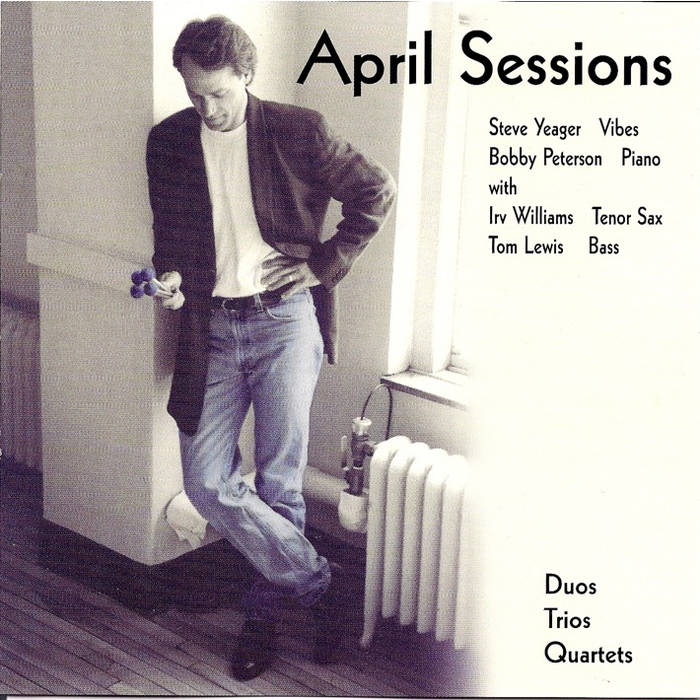
APRIL SESSIONS 1998
Tom Surowicz
Minneapolis Star Tribune
August 1998
Yeager’s work favorably recalls some of the top vibes players in Jazz:
Bobby Hutcherson’s warmth, Milt Jackson’s bluesy, groovy finesse; Gary Burton’s modern conception.